
Description
How to Find Gold in the Desert 2025
How to find gold in the desert 2025 is a repeatable method, not a guessing game. In arid terrain, gold moves during short flood pulses and then concentrates where energy drops—so the goal is to read transport pathways, locate natural traps, and confirm results with smart sampling before you dig.
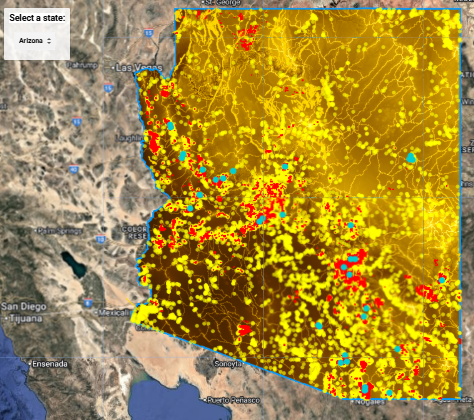
First, plan your desert trip using our internal resources. Then, learn the geology patterns that control where gold concentrates.
External references for research and verification: USGS, USGS MRDS, BLM, Mindat.
Tip: If RankMath ever misses links inside HTML blocks, paste the same links once as plain text beneath this card.
1) Start With Desert Gold “Highways”: Dry Washes
In desert systems, water is rare—so when it moves, it moves hard. As a result, gold often travels in short, violent pulses and then drops out where flow energy collapses. Instead of digging everywhere, begin by sampling the lowest-effort traps that consistently hold heavies. For example, inside bends, wash constrictions, and confluences concentrate dense material after floods. Likewise, exposed bedrock, fractures, and clay seams can act like natural riffles that catch gold.
Dry wash traps that consistently hold gold
- Inside bends and point bars (especially where cobbles stack)
- Bedrock “steps,” cracks, and riffle-like grooves
- Confluences where tributaries dump heavies into a main wash
- Pinch points where the channel narrows, then widens suddenly
2) Then Check Benches, Terraces, and Old Channel Levels
Many desert placers are not in today’s active channel. Over time, uplift and downcutting leave older river levels sitting higher as benches and terraces. Therefore, if a wash looks “too clean,” scan above it for terrace gravels, cemented layers, and packed cobble bars that indicate older transport. In many districts, those elevated gravels can be richer because they were concentrated earlier and then preserved.
3) Use Caliche and Hardpan as Clues
Caliche doesn’t create gold, but it often marks stable surfaces and long periods of weathering. In addition, hardpan layers can trap heavies above them or concentrate fines at their contact. When you hit caliche, slow down: sample the contact zones, compare results across a short line, and then follow the best pay streak laterally. Consequently, you can narrow down the “productive band” without wasting an entire day digging blind.
4) Don’t Ignore the Source: Lode Clues Above the Wash
If you want to improve your odds quickly, connect placers to potential lode sources. For example, quartz veins, iron staining, breccias, and shear zones uphill can shed gold into the drainage. Because of that, the most productive washes are often the ones cutting below faults, structural intersections, and altered rock. When you see a wash crossing structure, sample before and after the crossing to confirm whether the structure is feeding gold downstream.
5) A Simple Sampling Plan for How to Find Gold in the Desert 2025
- Start with 5–10 quick samples across a short wash segment (spread out first).
- Next, tighten spacing where you see heavies, black sands, or coarse gravels.
- Then, test the trap zones: bedrock cracks, inside bends, and pinch points.
- Finally, work upslope to check for lode indicators feeding the system.
Ultimately, how to find gold in the desert 2025 is systems thinking: transport + traps + source. When you combine field sampling with smart planning, you cut wasted ground dramatically and focus effort where geology proves itself.
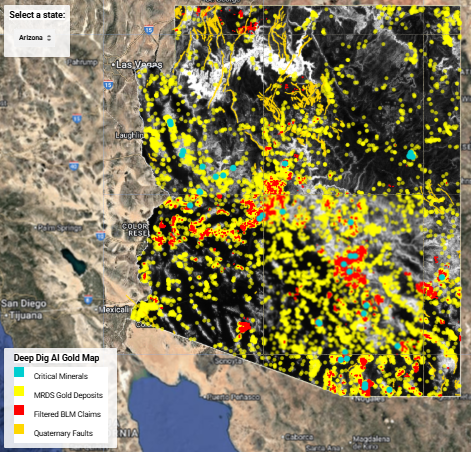
Use the AI Gold Maps to locate structure, basins, and proven mineral districts. Then, reinforce the patterns with the Gold Geology Videos page before your next desert trip.






Reviews
There are no reviews yet.