The Appalachian Orogenic Gold Zones
The Appalachian Orogenic Zone on the East Coast has a rich history of gold mining, with the region’s complex geology offering significant opportunities for modern-day prospectors. Historically, gold discoveries in the Appalachians date back to the early 19th century, with the first major gold rush occurring in North Carolina in 1799. This event marked the beginning of America’s gold rush era, long before California’s more famous gold rush. The Carolina Slate Belt, stretching through parts of North and South Carolina, Georgia, and Virginia, became a significant area for mining activity. In fact, North Carolina was the largest gold producer in the U.S. until the California Gold Rush in 1848.
Appalachian Gold Zone History
The Appalachian Mountains’ orogenic history, with multiple tectonic events (such as the Taconic, Acadian, and Alleghanian orogenies), played a critical role in the formation of gold deposits. Inside the Appalachian Orogenic Zone these tectonic forces caused heat and pressure that remobilized and concentrated gold within quartz veins and fault zones, which are still accessible to prospectors today.
Future Gold Prospecting Opportunities
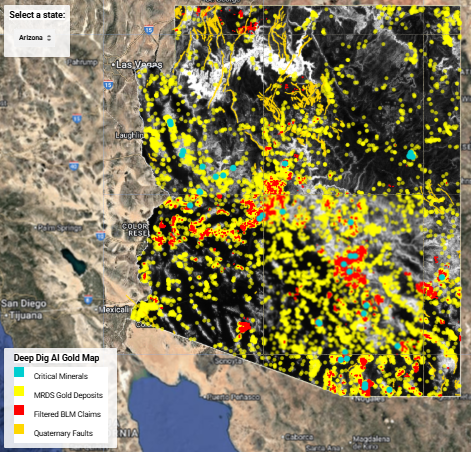
Re-exploration of Historic Sites: Many historic gold mines in North Carolina, Virginia, and Georgia remain long abandoned. However, these areas still hold great potential for modern prospectors. Tools like ground-penetrating radar and remote sensing help identify hidden gold deposits. AI-based mapping can also reveal previously missed targets. Revisiting the Appalachian Orogenic Zone offers a low-cost entry point for new claim owners and small-scale miners.
Untapped Potential in Virginia and Georgia: Virginia’s Gold-Pyrite Belt extends through the state’s center and includes many historic mines. One example is the Goldvein Mine, which still shows promising potential for exploration. Georgia’s Dahlonega Gold Belt also has historic significance and untapped zones. Thanks to better gold extraction methods, interest in this region is growing again.
New Claims and Regulations: It is still possible to acquire gold claims in the Appalachian region through proper legal channels. Federal and state programs help individuals and companies secure mineral rights. Interest in gold is rising due to economic uncertainty and inflation concerns. Claiming land in North Carolina, South Carolina, Georgia, or Virginia may prove a smart investment. Modern methods like placer and lode mining work well in both historic and unexplored zones.
Potential for Large-Scale Development
Potential for Large-Scale Discoveries: Smaller mining operations dominate the Appalachian region today. However, geologists believe deeper layers may hold much larger gold deposits. Improved drilling and survey technology could uncover a major discovery. Such a find could transform gold mining across the entire Eastern United States.
Future Opportunities for Gold Mining in the Appalachian Orogenic Zone
The East Coast’s Appalachian Orogenic Belt holds tremendous future opportunities for those looking to join a new era of gold prospecting. Whether through modern AI-driven exploration methods or traditional panning and placer mining, the region offers a promising path for those willing to invest in their prospecting future.
Visit Aurum Meum’s Gold Mine Academia on YouTube
- New AI Gold Map Page and Gold Geology Video Library
- Aurum Meum Gold Map
- Quaternary Faults and Gold
- Gold Probability Masterclass
- Utah Orogenic Gold Zone
About the Author